)
)
)
Falmouth Rugby Club Welcomes New Leadership as Women's Section Grows
A significant turnover of officials and volunteers has reshaped Falmouth Rugby Club ahead of the new season, with Julia Rowe taking over as chair in June.
She described the months since as a steep learning curve: "We've had a huge turnover in roles within the club," she said. "A lot of people have stepped down and a lot have taken up those roles. There has been a huge amount of work behind the scenes to get us where we wanted to be for the start of the season."
Rowe's focus since taking charge has been getting as much rugby played by as many people as possible, from adults through to the academy, while embedding the club further into the local community. "We don't look at problems; we try to find solutions," she said. "We want to become even more of a community place and embrace more families. We want to be a big family club."
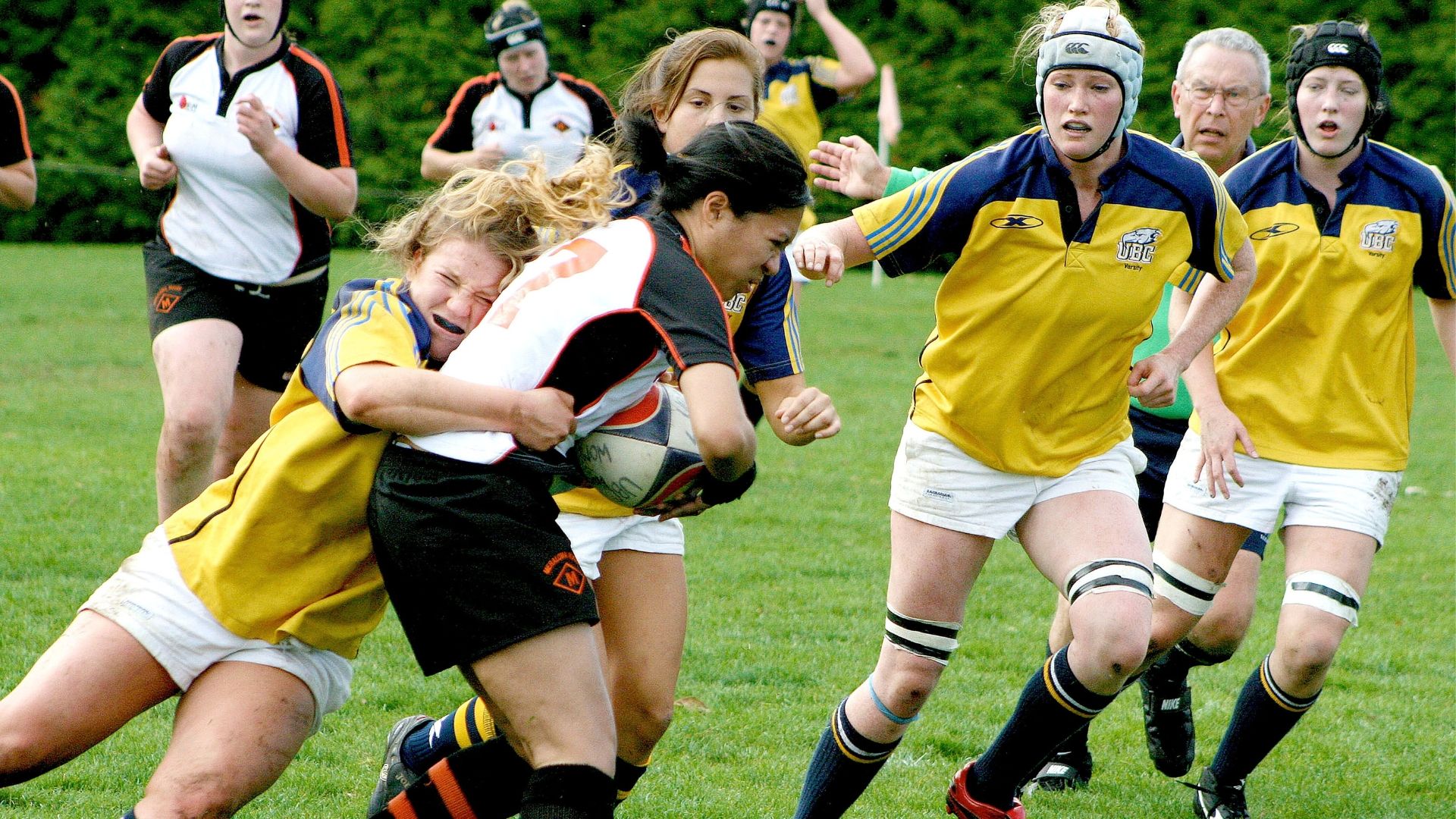
The women's section has proven to be a great example of that growth, expanding considerably since its formation in August 2022. "There were several months when there were just four of us turning up to training, so you had to really dig in," said women's captain Lydia Hawkins. "But we've seen a massive increase and a really upward trend."
The section, now around 25 to 30 strong, is recruiting again following the departure of several players who graduated or moved away, though Hawkins credits the rising profile of women's rugby internationally with drawing in new interest.
Hawkins also serves as the club's grounds person, a role tested hard by an unusually hot, dry summer. "The summer has been tough on the pitch," she said. "We've got three senior teams and a whole host of minis and juniors who all play and train on this one pitch, so it's important that we look after it. I spend a lot of time chasing people off different parts of the pitch. The teams might get frustrated with me, but it does pay off."
Director of rugby Tom Spiller, who has been associated with Falmouth for more than three decades, said player safety remained non-negotiable. "It is a physical game and we need to make sure the safety of our players is paramount," he said. His focus is on building a clear pathway from the club's academy into its senior sides, supported by Josh King from the Cornish Pirates, who coaches the senior team. "Our strategy is to make this a community club that players want to come and play their rugby at and to be at the heart of the town," Spiller said.
Julia Rowe's path to becoming chair of Falmouth Rugby Club was not straightforward; she initially turned the role down, citing her limited knowledge of the game, but the club were more interested in her business experience and problem-solving instincts than her rugby credentials. Many grassroots clubs default to handing a vacant roles to their longest serving members, rather than asking what skills the position genuinely needs. Falmouth's decision to look beyond that instinct, and the club's momentum since, suggests it's worth clubs looking beyond the obvious option when filling their committee roles.
Sponsorship and volunteer support remain essential to sustaining that progress, as Rowe is keen to note: "Rugby doesn't pay for itself anymore. We couldn't do a lot of this without our sponsors, and we really value them. Alternative income streams are essential, and sponsorship is a massive one for grassroots rugby."
Volunteers are being sought in any capacity, from catering and cleaning to maintenance or simply a few spare hours. "Whatever your skill set is, we will embrace you," Rowe added. "There is nothing too big or too small, and you don't have to come every day or every week. People can give whatever their lives allow." Hawkins noted that volunteering can also build genuinely useful skills in safeguarding, first aid, injury treatment and grounds maintenance.
For senior player Cam Bullock, the club's real value has little to do with committees or strategy. "They're not just your teammates; they're your mates and your best friends," he said. "You start together in the minis and juniors and build a bond. It becomes like a little brotherhood. It's playing rugby with your mates, and it's fun."
Rowe agrees that preserving that sense of belonging may ultimately matter more than results. "We're not looking at massive, great things," she said. "It's not always about winning. It's about participation, your teammates and all those friendships you build for life."