)
)
)
Why Grassroots Sports Clubs Matter
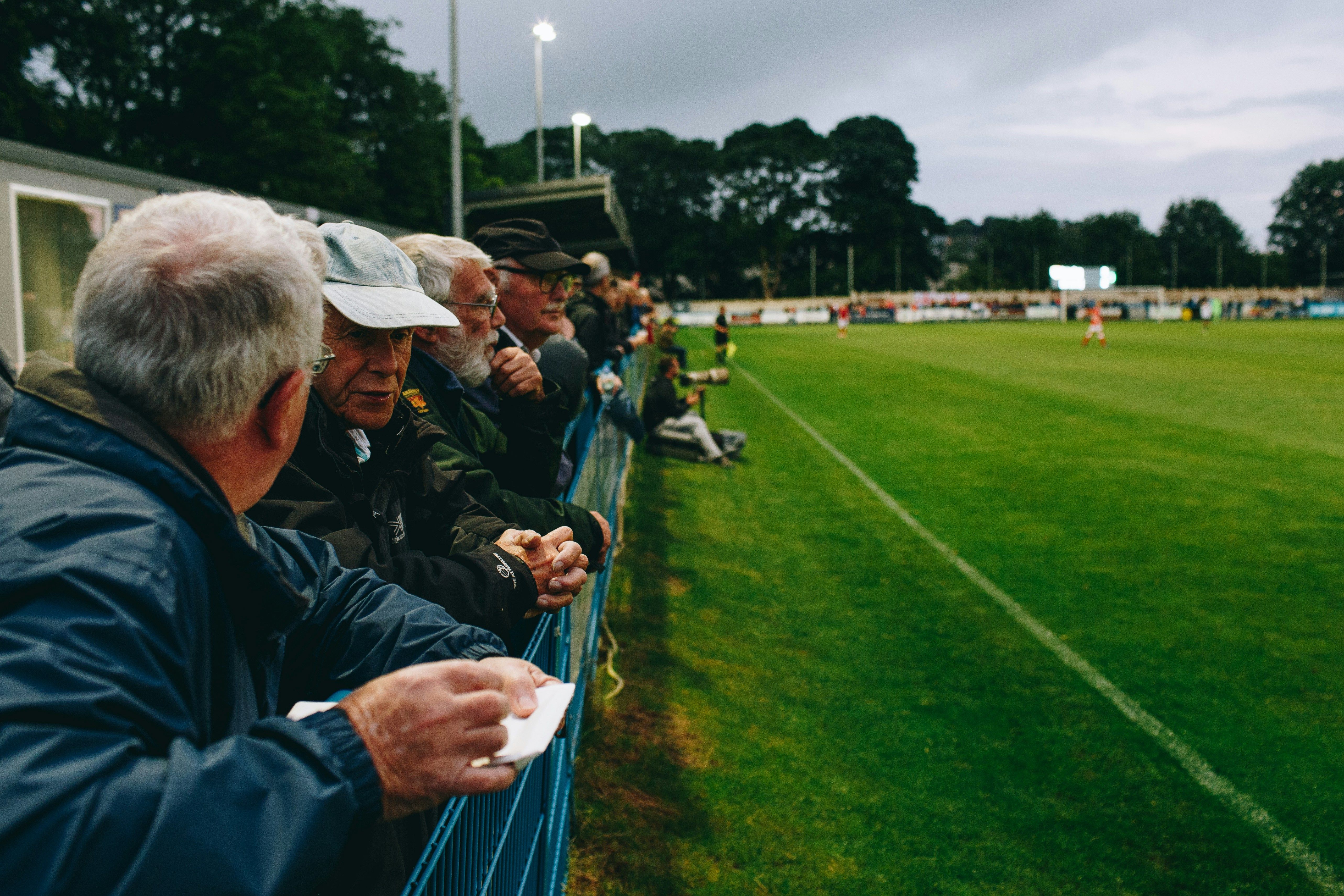
Grassroots sports clubs sit at the heart of millions of lives across the UK, and The Clubhouse was founded to help them do it better — to grow, modernise and thrive, whatever their discipline or size.
The scale involved is enormous. 65% of the UK's adult population spends more than 150 minutes a week playing sport or exercising, a statistic built on countless hours of work, much of it voluntary, that make grassroots sport possible for an estimated 31 million participants.
The popularity of grassroots sport is evident, but the numbers make its significance harder to ignore: people rarely give their time and energy to something every week unless it holds real value for them. The question worth asking is why.
They Get Everyone Moving
Exercise is undoubtedly beneficial to a person’s overall health, and the UK’s ongoing health crisis makes the need for accessible, regular exercise all the more urgent. Almost a quarter of adults (24.7%) are inactive, doing less than 30 minutes of exercise a week, while 64% are overweight or obese, including 28% who are clinically obese. As more and more studies confirm the scale of inactivity and weight-related illnesses, local, inclusive sports clubs can so often provide a solution. It is important to say that many factors can impact an individual’s weight and that joining a sports club or exercising regularly might not be best for everyone. But for those who can, physical activity can be hugely beneficial to their overall health.
People who exercise regularly will have a lower risk of coronary heart disease and stroke, type 2 diabetes, osteoarthritis, and some forms of cancer. Being physically active is essential for maintaining a healthy lifestyle and grassroots sport is one of the most easily available and enjoyable ways to go about it.
And being physically active doesn’t need to mean intense exercise that leaves you red in the face and gasping for air. Far from it. A 2023 study found that light physical activity can be just as — and sometimes even more — effective than moderate to intense exercise in reducing the risk of several diseases.
The popularity of walking sports has surged in the UK, providing accessible, low-impact physical activity while still maintaining a competitive edge. Disciplines like football, rugby, cricket, netball, and tennis are all able to adapt traditional rules to accommodate anyone and everyone looking for a sociable way to benefit from light exercise. The more clubs able to offer these innovative and inclusive activities, the easier it is for everybody to exercise regularly.
None of this is to mention the remarkable effect that exercise can have on an individual’s mental health. Physical activity stimulates the brain to release endorphins and serotonin while reducing levels of adrenaline and cortisol in your body; in other words, it boosts your mood and reduces stress. Exercise has been shown to improve participant’s overall motivation and focus, both during physical activity and in other areas of their lives.
Seeing your sporting performances improve or setting and reaching a fitness goal provides a tangible sense of achievement, pride and motivation. By consistently challenging yourself physically, you build resilience. As a member of a club you build social connections and a sense of belonging.
This is where grassroots clubs are vital. Participation in sport and exercise offers immense physical and mental health benefits, and grassroots clubs provide millions of people with the opportunity to experience them.
They Produce the Next Elite Generation
Every elite athlete began at a grassroots level. Sporting superstars have to be discovered — their talent must be proven — before professional outfits will take notice.
Grassroots clubs teach the fundamentals of the sport, give everyone the chance to practise, perhaps even provide the necessary equipment. Without these local clubs there would be nowhere for new talent to be discovered and no way for professional clubs to know who’s worth signing.
As a result, the growth and success of grassroots clubs can only ever have a positive impact on sport at every level. More people playing grassroots sport creates a larger talent pool for the elite clubs to fish from and, inevitably, a higher standard at the top level.
But growth and success for grassroots clubs does not simply mean more participants for the sports already popularised in UK culture. If every child regularly plays football — but only football — then there is no chance of British basketball’s next star shining through.
Furthermore, there is the subject of individual taste. A well-run ecosystem of local sports clubs will offer plenty of alternatives, meaning the cricket-naysayer is still able to engage with the netball they love and vice versa. This lets everybody find the discipline in which they excel and, by extension, allows professional clubs of every sport to find the very best talent.
The more sports clubs there are, the more sports they cater to, the more participants they attract, the better the quality of elite sport in the UK.
They Build Community
Sport is an inherently social activity. Whether playing, coaching, spectating or simply passing by, it creates opportunities for social connection which might otherwise never happen. This is clearest in team sports: if you play a team sport and aren't constantly talking to your teammates on the pitch, you are doing it wrong. But even individual sports are rarely solitary. How often do you find yourself excitedly talking to a fellow enthusiast, or staying behind at your club to talk through the day's action?
Very few sports can be enjoyed in total isolation. You might enjoy a solo round of golf, but in truth, it is never actually solo: you meet club employees as you check in; interact with other players out on the course; at the halfway house you meet the employees working there and fellow golfers taking a mid-round break; if you stop for refreshment after your round, you will inevitably find yourself among others doing the same. Any one of these incidental interactions can change your day for the better.
Of course, team sports require constant interaction. Good communication is at the heart of any successful team and with it comes a camaraderie that can last long after the final whistle. It's not uncommon to see a group of cricketers chatting on the boundary, their ages separated by decades, finding common ground in the sport they play together.
Crucially, the social aspect of sports clubs extends far beyond those who play. Sport England has highlighted the immense contribution of 6.7 million volunteers to sport, and the scale of that commitment becomes clearer still through coaching alone: more than three million people give up their time every year to coach in sport and physical activity, with more than nine million people receiving that coaching. They will often take on multiple roles as the club requires, each role bringing them into contact with a different group within the club.
Parents sacrifice Saturday and/or Sunday mornings to take their children to matches, and when the quality of sport on the pitch proves unworthy of comment, conversations inevitably turn elsewhere. Friendships are formed, and volunteers are recruited.
But volunteering is about more than just keeping a club running. The people who give their time to the smooth running of their club are the people who turn a group of participants into a functioning community. Their work is often unseen and unpaid but, without it, much of grassroots sport could not exist. The value of sport volunteering has been estimated at almost £5 billion — the second largest volunteer sector in the country behind caring for family and friends. In many cases, volunteers aren't just helping out their club — they are the club.
For many smaller towns and villages, the local sports club may be the last remaining physical community hub. The club's facilities can be used to host events beyond sport, bringing the local population together and placing the club at the centre of the whole community.
But community only works if everyone is invited in. Despite the real progress grassroots sport has made with inclusion, some glaring gaps remain: disabled people are still far more likely to be inactive than non-disabled people (39.3% compared with 19.7%), and women continue to be less active than men (62.2% compared with 67.3%). These gaps can widen further for people facing more than one barrier at once.
Grassroots clubs are uniquely placed to close these gaps. By offering adapted sessions, women-only slots, junior pathways, or just a genuine, welcoming space, local clubs can turn sport into something that includes everyone, not just those who already feel it was built for them.
Grassroots clubs connect people who might otherwise never meet — people of different ages, cultures, schools or careers come together through a shared love of sport. They share stories, work hard together, spend time with each other and build often unlikely friendships that can last a lifetime.
It is this accumulation of seemingly ordinary interactions — between players, parents, volunteers, staff, and locals — that gives grassroots sport its extraordinary capacity to generate social capital. This value lies not only in the relationships formed around sport, but in the trust, belonging and connections that endure beyond the club itself, contributing to stronger, more connected communities.
More Than Just Sport
Grassroots clubs are about far more than what happens on the pitch, court, course or track. They give millions of people the opportunity to improve their physical and mental health, provide the foundations from which the next generation of sporting talent can emerge, and bring together people who might otherwise never have crossed paths.
That is what makes grassroots sports clubs so important. Yes, they are places where people exercise, compete and improve, but they are also places where communities are strengthened, friendships are formed, confidence is built and opportunities are created. The sport might be what brings people to the club, but it is everything around it that makes them stay.
For that reason, grassroots clubs deserve the support, investment, and resources they need to grow and thrive. And that is exactly why The Clubhouse exists: to help every club, regardless of its sport, size, or ambition, become the best version of itself.
Because when grassroots clubs thrive, the people and communities around them thrive too.